In the dynamic landscape of 2026 home design, the most sought-after furniture isn’t necessarily what you find in a high-end showroom—it is the piece you’ve reimagined yourself. As the “Slow Living” and “Sustainable Luxury” movements reach their peak this year, homeowners in the US are moving away from disposable, flat-pack items and toward Adaptive Design.
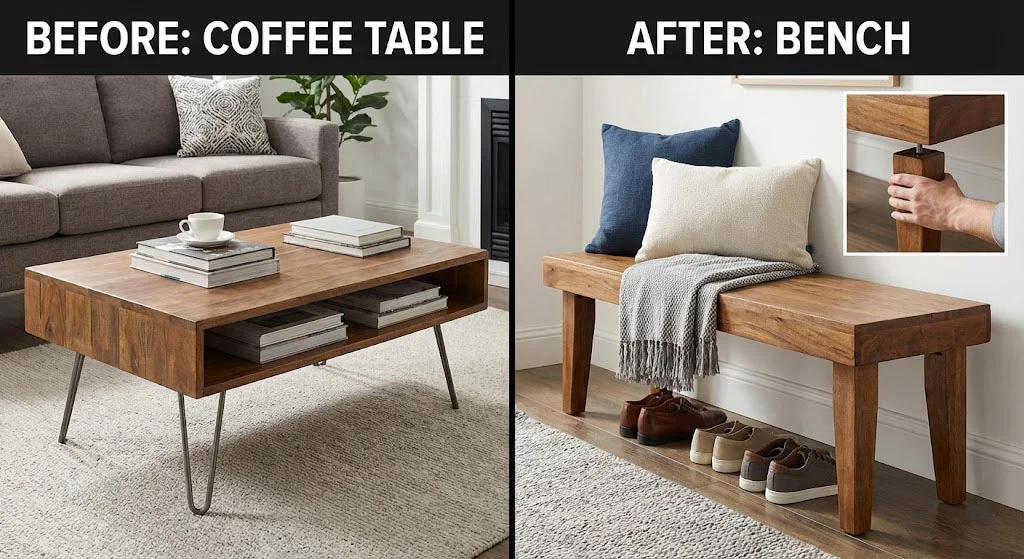
One of the most satisfying and impactful ways to embrace this trend is through a simple but transformative project: The Leg Swap. Specifically, taking a retired coffee table and elevating it into a functional, stylish bench. Whether you have a solid wood tabletop with outdated legs or an “IKEA hack” that needs more height, here is how you can transform your space by simply changing the foundation.
The Philosophy of Adaptive Living in 2026
Why are we seeing such a massive spike in “repurposing” furniture this year? It comes down to two factors: Environmental blurring and meaningful luxury.
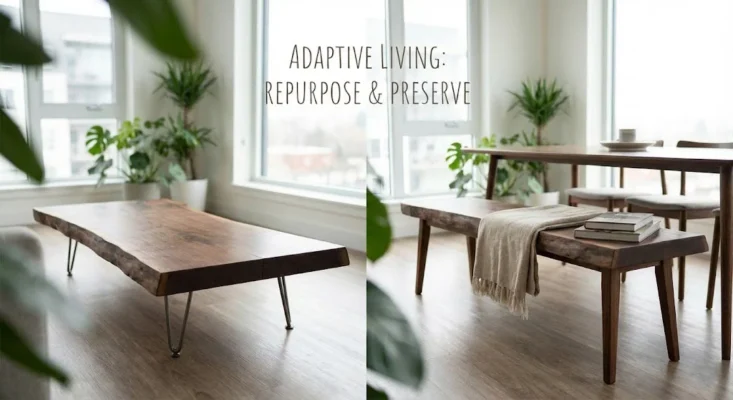
In 2026, our homes are smaller and more multifunctional. We need pieces that can transition from a hallway accent to extra seating for a dinner party. Furthermore, there is a newfound respect for materials. A high-quality slab of American Walnut or White Oak shouldn’t be discarded just because its current height no longer fits your lifestyle. By swapping the legs, you aren’t just saving money; you are preserving the “story” of the wood while giving it a new purpose.
The Technical Shift: From 14″ to 18″
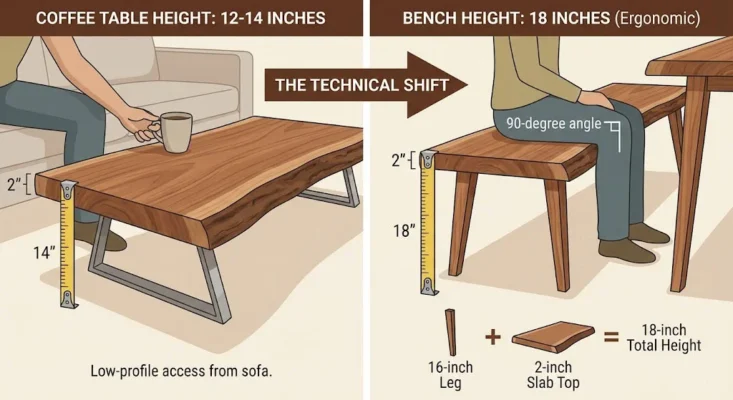
The primary difference between a coffee table and a bench is ergonomics.
Coffee Table Height: Typically ranges from 12 to 14 inches. This is designed for visibility and low-profile access from a sofa.
Bench Height: To be comfortable for the human body, a seat needs to be approximately 18 inches high.
When choosing your new legs, remember to subtract the thickness of your tabletop from the target height of 18 inches. If your wood slab is 2 inches thick, you should search for 16-inch furniture legs. This ensures that when you sit down, your knees are at a natural 90-degree angle—crucial for a piece that will be used daily in an entryway or at a dining table.
Choosing the Right Foundation: 2026 Style Profiles
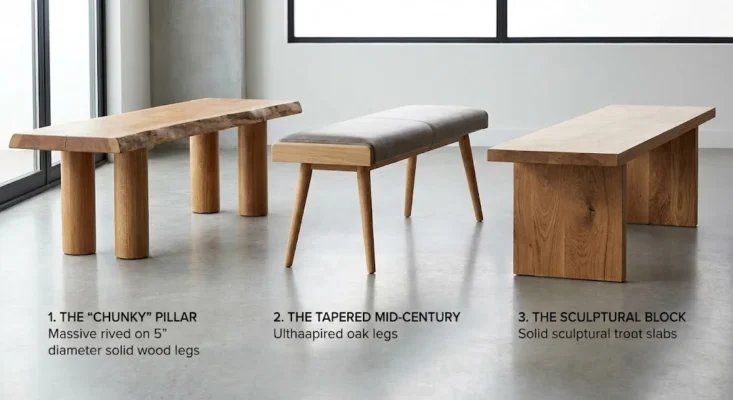
The legs you choose will define the “vibe” of your new bench. Here are the three leading styles for the 2026 US market:
1. The “Chunky” Pillar (The Bold Choice)
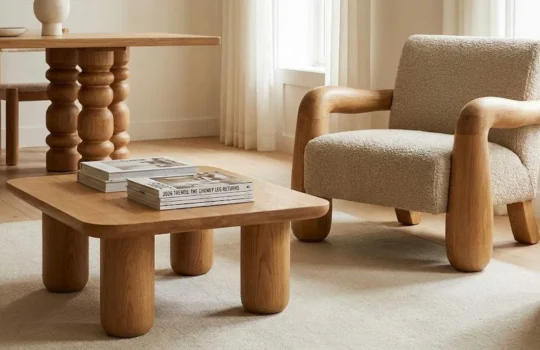
As we’ve seen in recent trends, “visual weight” is back. Using thick, 4-inch or 5-inch diameter cylindrical wood legs creates a sense of grounding and permanence. This style is perfect if your bench is going into a high-traffic entryway where it needs to look (and feel) indestructible.
2. The Tapered Mid-Century (The Timeless Choice)
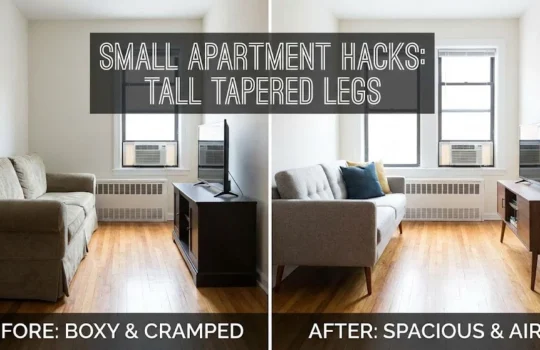
If you want to maintain a sense of “airiness” in a small apartment, go for tapered oak or walnut legs. These slanted, elegant legs draw the eye upward and keep the floor space looking open. It’s the perfect look for a bench placed at the foot of a bed.
3. The Sculptural Block (The Art-Piece Choice)
For those following the “Japandi” or “Minimalist” aesthetic, wide, rectangular block legs offer a clean, architectural look. They showcase the wood grain beautifully and provide maximum stability for heavier tabletops.
Step-by-Step: The Transformation Process
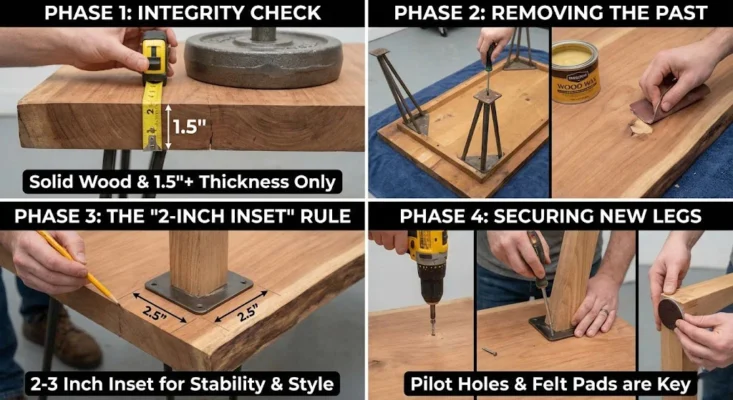
Phase 1: The Integrity Check
Before you buy your legs, ensure your tabletop is up to the task. A bench must support human weight (often 150–250 lbs or more), whereas a coffee table only supports books and mugs.
Solid Wood is King: Ensure the top is solid timber or high-grade birch plywood.
Thickness Matters: A top thinner than 1.5 inches may flex or “bow” over time if it’s too long without middle support.
Phase 2: Removing the Past
Flip your coffee table over. Most modern furniture uses Top Plates or M8 Hanger Bolts. Carefully unscrew the old legs. If the wood underneath is damaged, don’t worry—this is the perfect time to sand the surface and apply a fresh coat of high-quality wood wax or oil to bring back the “glow.”
Phase 3: The “2-Inch Inset” Rule
For maximum stability and aesthetics, do not place your legs at the very edge of the corners. In 2026, the “Professional Curator” look involves insetting the legs about 2 to 3 inches from each edge. This creates a slight overhang that makes the piece look custom-made and prevents the legs from being a “toe-stubbing” hazard.
Phase 4: Securing the New Legs
Use a drill to create “pilot holes” before driving in your screws. This prevents the wood from splitting—a common mistake in DIY projects. Once the legs are attached, add heavy-duty felt pads to the bottom to protect your hardwood floors.
Where to Place Your Reborn Bench
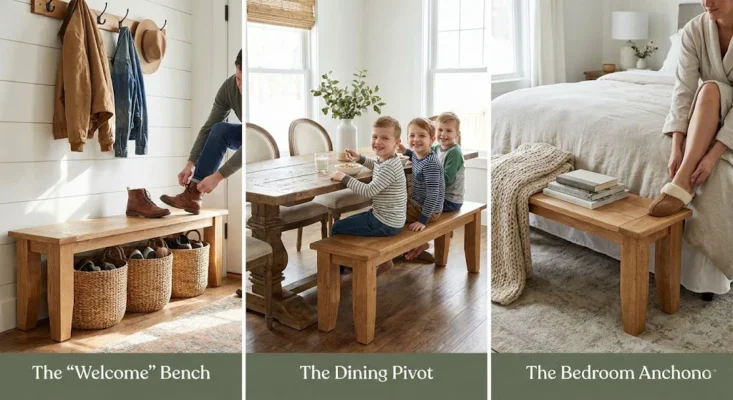
Once the swap is complete, where does your new piece belong?
The “Welcome” Bench: Place it in the entryway with a few woven baskets underneath for shoe storage. It provides a convenient spot to sit while putting on boots.
The Dining Pivot: If you have a growing family, a bench is a great way to squeeze three kids onto one side of the table where only two chairs used to fit.
The Bedroom Anchor: Place it at the foot of the bed to hold decorative throws or as a staging area for your morning routine.
Maintenance for the Long Haul
A well-made bench is a “Modern Heritage” piece. To keep it looking its best, treat the wood once every six months with a natural oil. Check the mounting plates occasionally to ensure the screws remain tight, especially if the bench is used frequently by guests.
Small Change, Big Impact
Transforming a coffee table into a bench is more than just a weekend DIY project; it is a statement about how we view our possessions in 2026. It proves that with the right set of quality wood legs and a bit of vision, we can create high-end, functional luxury without the high-end price tag or the environmental cost.
Don’t let a great piece of wood go to waste. Swap the legs, change the height, and reclaim your space.